
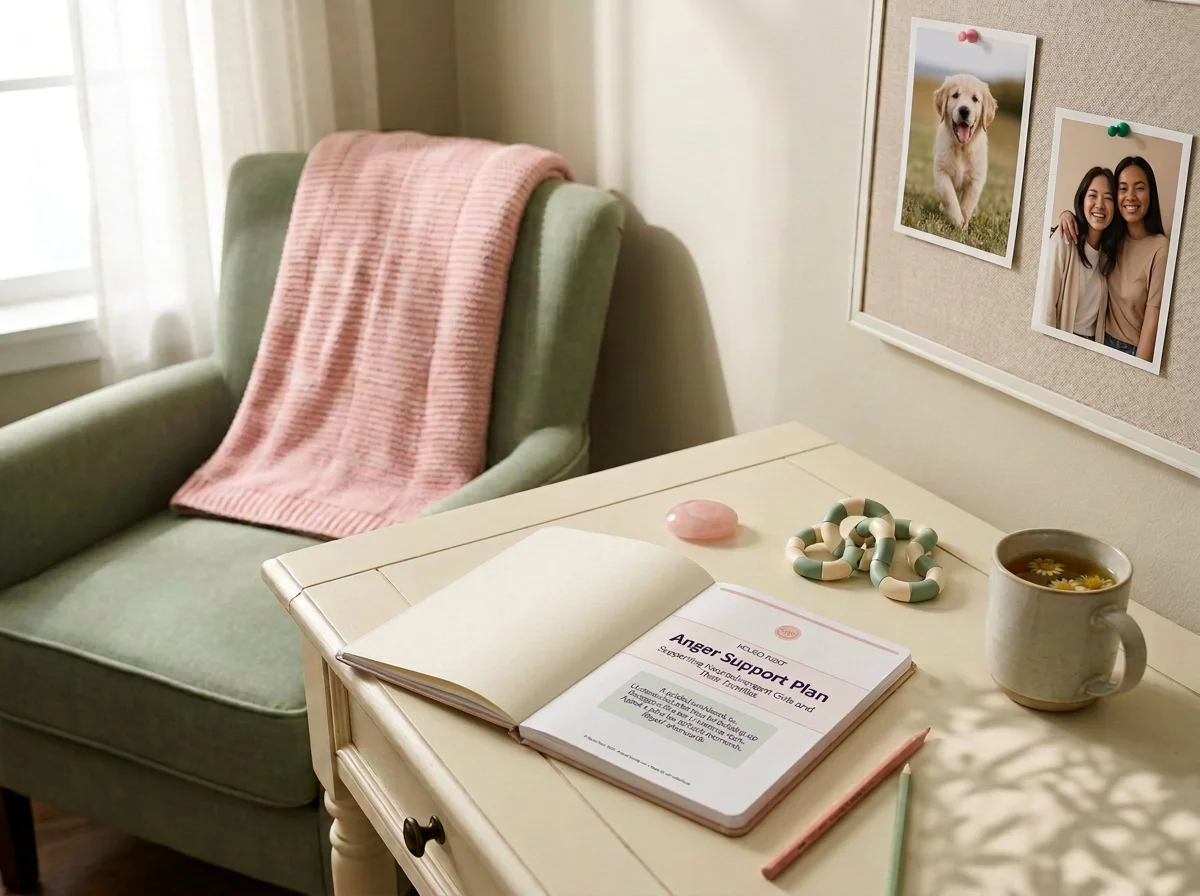
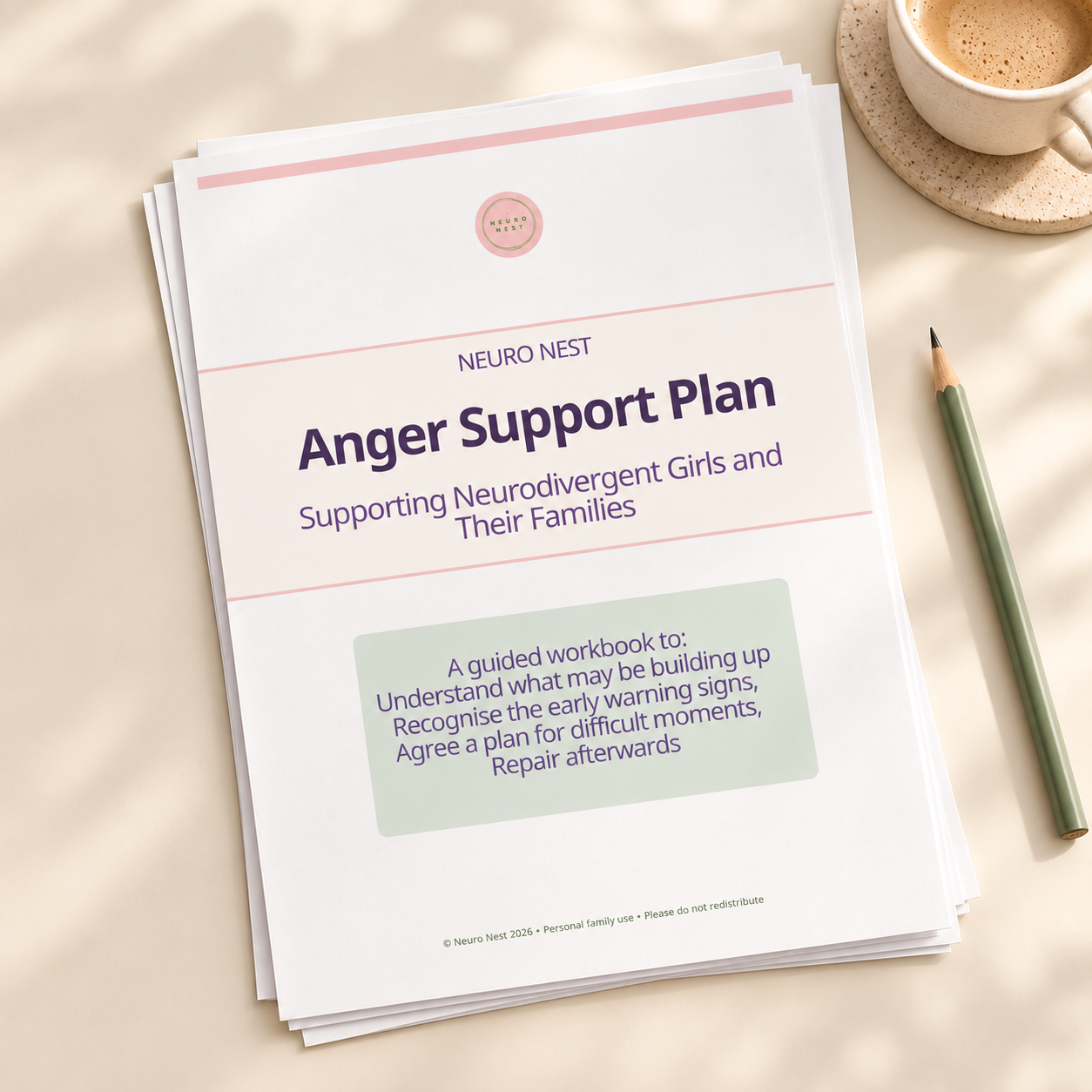
Supporting neurodivergent girls and their families.
When your daughter’s anger feels overwhelming, it can be difficult to know what to do, or where to start.
This gentle, guided workbook gives you space to understand what may be building up, explore what helps and create a support plan that fits your family.
With practical prompts across four workbook pages, you can:
Notice pressures that may be contributing to difficult moments.
Recognise early clues and agree ways to ask for support.
Plan helpful words, space and support when things get too much.
Consider siblings’ safety and the support you need too.
Make time for recovery, reconnection and repair afterwards.
Your daughter can contribute by talking, drawing, writing or pointing, or you can begin with your own observations. There is no need to complete everything at once.
What’s included
A five-page printable PDF, including a cover and four guided workbook pages, with space to create your own family plan and links to further reading.
Download, print and work through at your own pace.
Already a Neuro Nest member? Access your included copy through the members area.
Digital download only. No physical product will be sent. For personal family use. This workbook supports reflection and planning; it does not replace individual professional advice or a safety plan.

A little predictability, a little flexibility, and some breathing room for everyone.
Half term can be a welcome break from the demands of school. But for neurodivergent girls, the change in routine, uncertainty about what’s happening next, and pressure to make the most of the holidays can sometimes feel overwhelming.
For parents, there’s often a tricky balance between planning enough to provide reassurance and leaving enough space for everyone to rest.
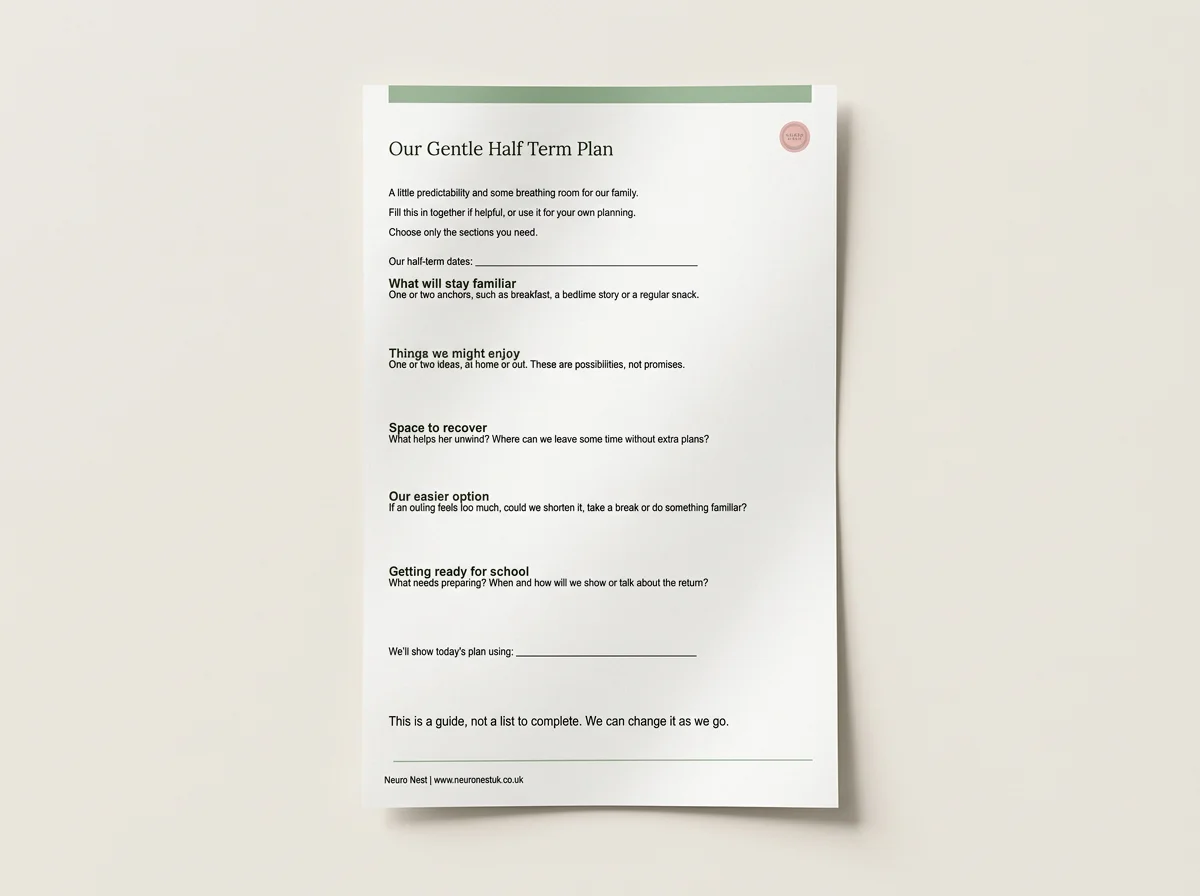
Our Gentle Half Term Plan is a simple, printable planning sheet designed to help you find that balance.
What’s included?
This one-page printable helps you think about:
What will stay familiar - keeping a few reassuring routines in place.
Things you might enjoy - making room for activities without turning them into expectations.
Space to recover - recognising the importance of downtime and regulation.
An easier option - having a flexible alternative when plans feel too much.
Getting ready for school - gently preparing for the transition back.
A plan that works for your family
You can fill it in together with your daughter, or use it quietly to guide your own planning.
There’s no expectation to fill every space, stick rigidly to a schedule, or make every day memorable.
Sometimes the most helpful half-term plan is one that gives everyone permission to slow down.
A gentle reminder: this is a guide, not a list to complete. You can change it as you go.

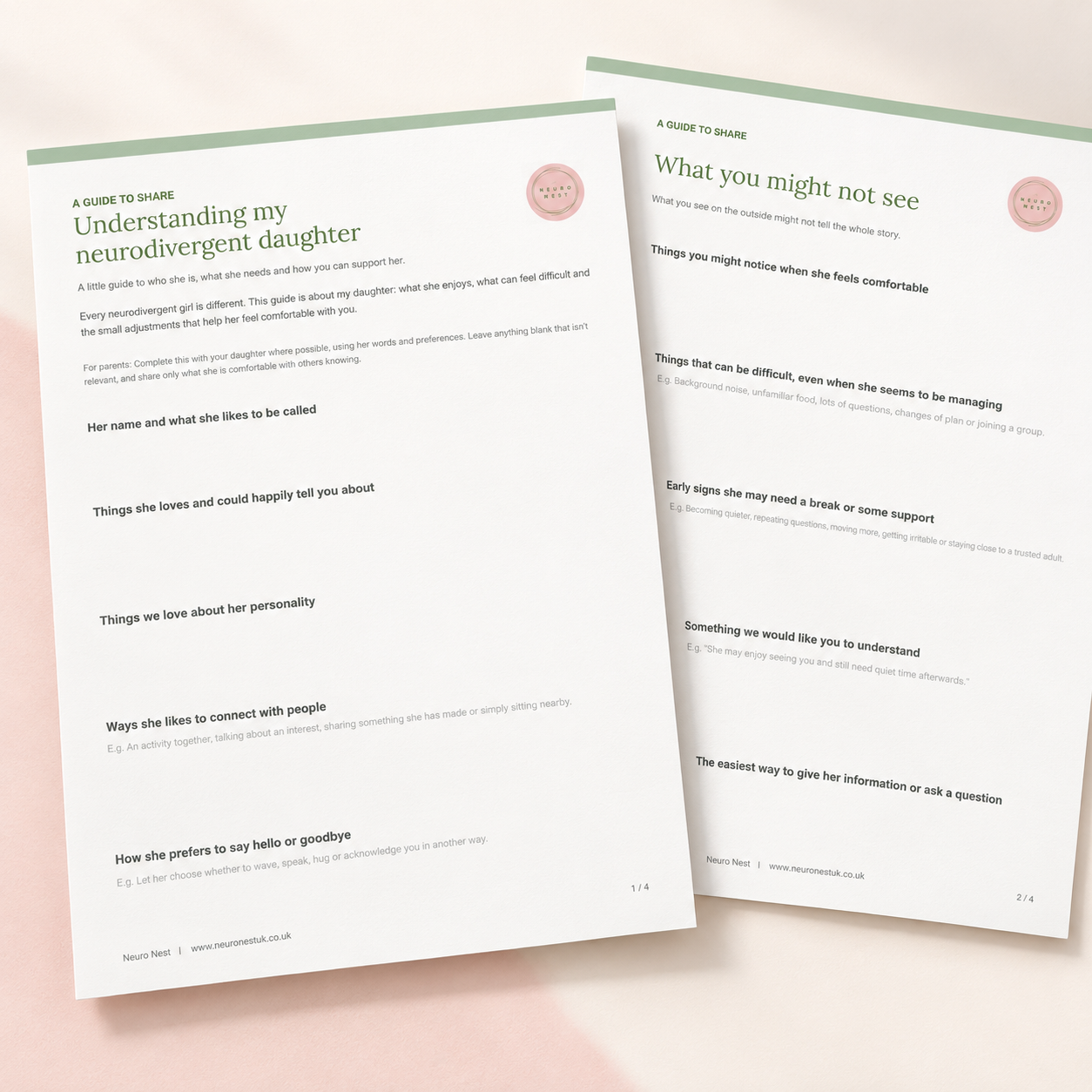
You know your daughter. Helping other people understand her isn’t always so straightforward.
Perhaps a grandparent doesn’t understand why she needs a break during a family gathering. A friend takes it personally when she doesn’t say hello. Or you find yourself explaining the same things before every visit.
Sometimes, the people who love our daughters want to help, but they need a little guidance about what that looks like.
This printable resource gives you somewhere to start.
£3.99 | Included at no extra cost for Neuro Nest members
More than a diagnosis or a list of difficulties
Your daughter has interests, preferences, strengths and her own ways of connecting with people.
This guide starts with who she is, then helps you explain what she finds difficult and the small adjustments that can make time together more comfortable.
Complete it in your own words, with your daughter’s input where possible, and share it with the family and friends you choose.
What’s inside?
A four-page printable PDF with clear prompts and space to write about:
Who she is: her interests, personality and favourite ways to connect.
What others might not see: things she finds difficult, even when she appears to be managing.
How she communicates: including what helps when she needs more time or feels overwhelmed.
Time together: preparing for visits, helpful adjustments and things to avoid.
When things feel too much: early signs, helpful responses and who to check in with.
Gentle examples help you get started, without assuming that every neurodivergent girl needs the same things.
Make it personal. Keep it manageable.
You don’t need to complete every section or share every detail.
Choose what feels useful, involve your daughter in a way that works for her, and share only what she is comfortable with others knowing. You can revisit the guide as her needs and preferences change.
It’s a starting point for understanding, not another task you have to get perfectly right.
What you’ll receive
One four-page A4 PDF to download, print and complete by hand.
This is a blank resource for you to personalise yourself, rather than a guide completed by Neuro Nest. No physical product will be sent.
You don’t need a formal diagnosis to use it: the focus is on your daughter’s individual needs and preferences.
A little less explaining from scratch
You can’t put everything about your daughter into four pages. But you can give the people around her a clearer starting point — and some practical ways to show that they care.
Already a Neuro Nest member?
This resource is included in your membership at no extra cost. Log in to your members’ area to download your copy — there’s no need to purchase it separately.
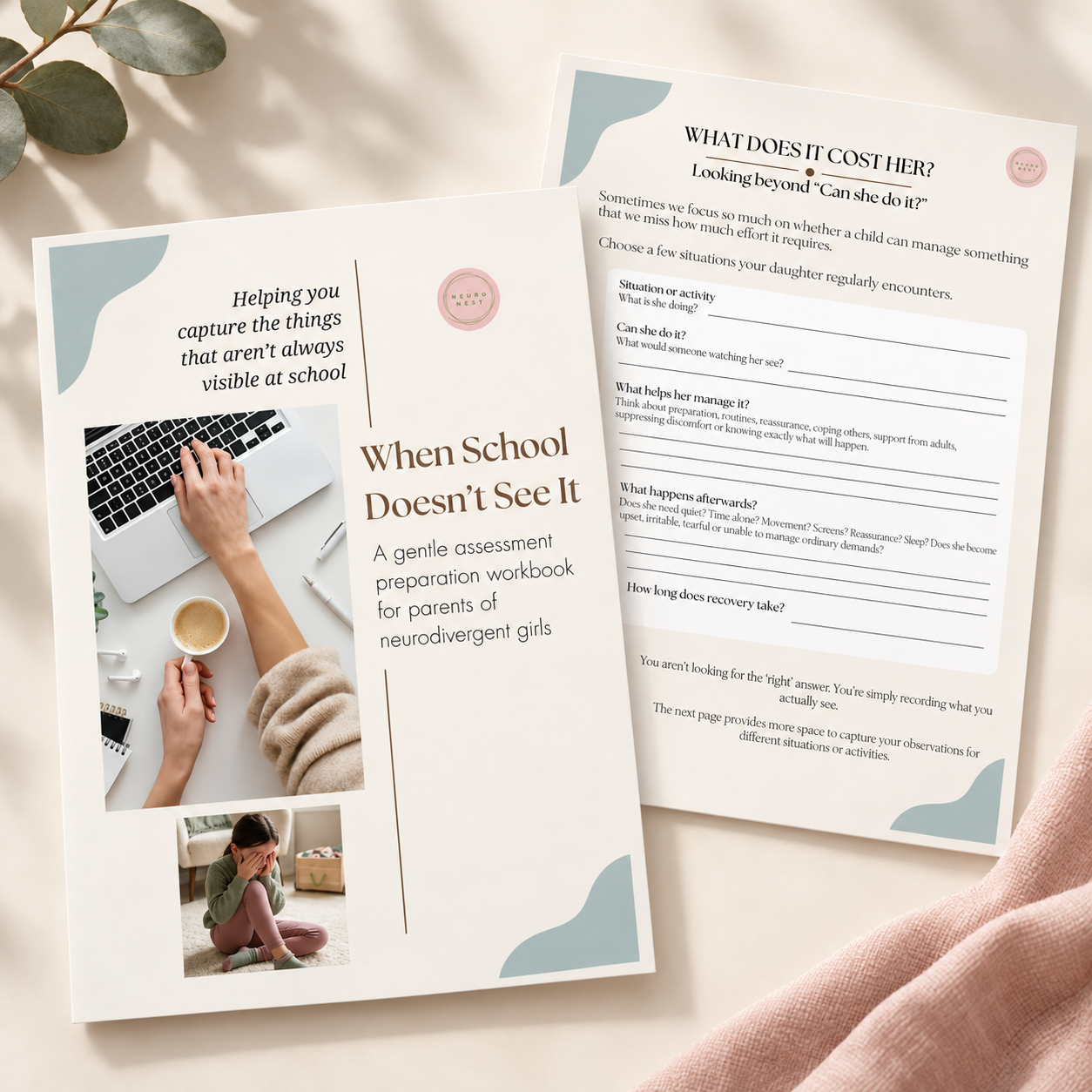

A gentle assessment preparation workbook for parents of neurodivergent girls.
School says she’s fine. But at home, you’re seeing a different picture.
Perhaps your daughter holds everything together during the school day, then falls apart when she gets home.
Perhaps friendships that seem easy from the outside leave her exhausted and worried.
Or perhaps you’re waiting for an autism or ADHD assessment and wondering:
“What if school says they have no concerns? How will I explain what we’re experiencing?”
When School Doesn’t See It helps you gather your observations, notice patterns and prepare to share a fuller picture of your daughter’s life.
Somewhere to put the things you’ve been noticing
When someone asks for examples, it can be surprisingly difficult to know where to start.
There are the school mornings. The worries at bedtime. The recovery after an outing everyone said she enjoyed. The little adjustments you make so automatically that you almost forget they’re there.
This workbook gives you gentle prompts and space to record those experiences, without needing to document every moment or produce a perfectly organised folder.
What’s inside?
Across 14 pages, you’ll find reassurance, practical prompts and worksheets covering:
The two sides of the day: what other people see and what you notice before, around or afterwards.
What does it cost her? Looking beyond whether she can do something to the support, effort and recovery involved.
Patterns I’m noticing: sensory experiences, friendships, transitions, attention, everyday tasks, emotions, school, sleep and interests.
A home and school pattern tracker: bringing together what happened around the school day, what your daughter shared and what helped.
Looking back: prompts to help you recall experiences from early childhood, nursery and primary school.
Her voice: space to capture your daughter’s experiences in her own words.
My assessment summary: pulling together her strengths, your main observations, specific examples and questions you don’t want to forget.
Who is it for?
This workbook is particularly suited to parents who are exploring whether their daughter may be autistic or have ADHD, or who are waiting for an assessment.
It may feel especially helpful if school’s observations differ from yours, or if you find it difficult to explain the effort behind what your daughter appears to manage.
You don’t need a confirmed diagnosis to use it.
Preparation, not proof
This isn’t a checklist to establish whether your daughter is neurodivergent, and it isn’t about proving school wrong.
It’s about recording what you actually notice — including strengths, support needs and experiences that may be less visible in other settings — so you can discuss them with the professionals involved.
You don’t need examples for every section. You don’t need to remember every milestone. And you don’t need to complete it all at once.
Use what helps. Leave what doesn’t.
What you’ll receive
A 14-page printable PDF workbook to download and complete by hand, at your own pace.
This is a digital resource. No physical product will be sent.
Help them understand more of her story
You know parts of your daughter’s life that other people don’t get to see.
This workbook gives you somewhere to capture those observations and somewhere to turn when you’re thinking, “What do I most want them to understand?”
Already a Neuro Nest member?
This workbook is included in your membership at no extra cost. Log in to your members’ area to access your copy rather than purchasing it separately.
This resource supports parents to organise observations and prepare for conversations with professionals. It is not a diagnostic tool, does not guarantee an assessment outcome and does not replace professional assessment or medical advice.

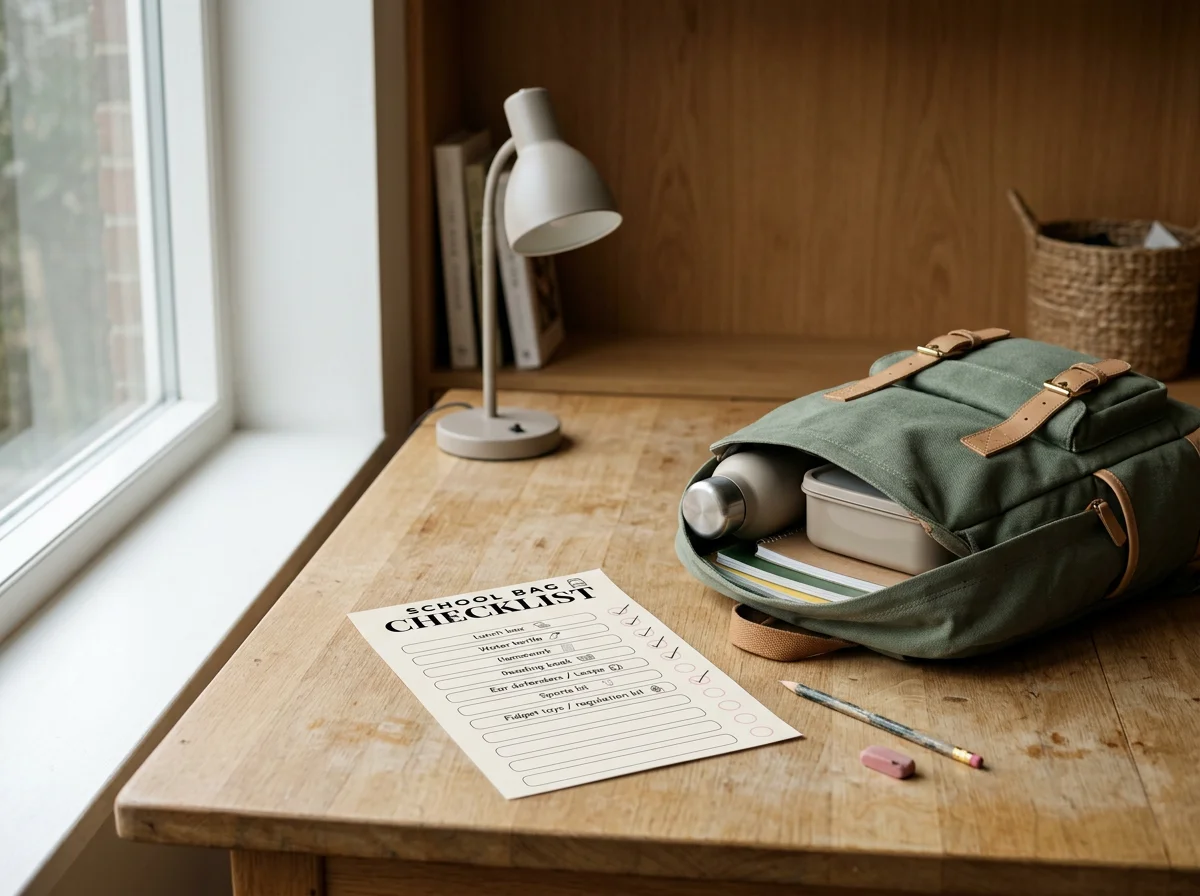
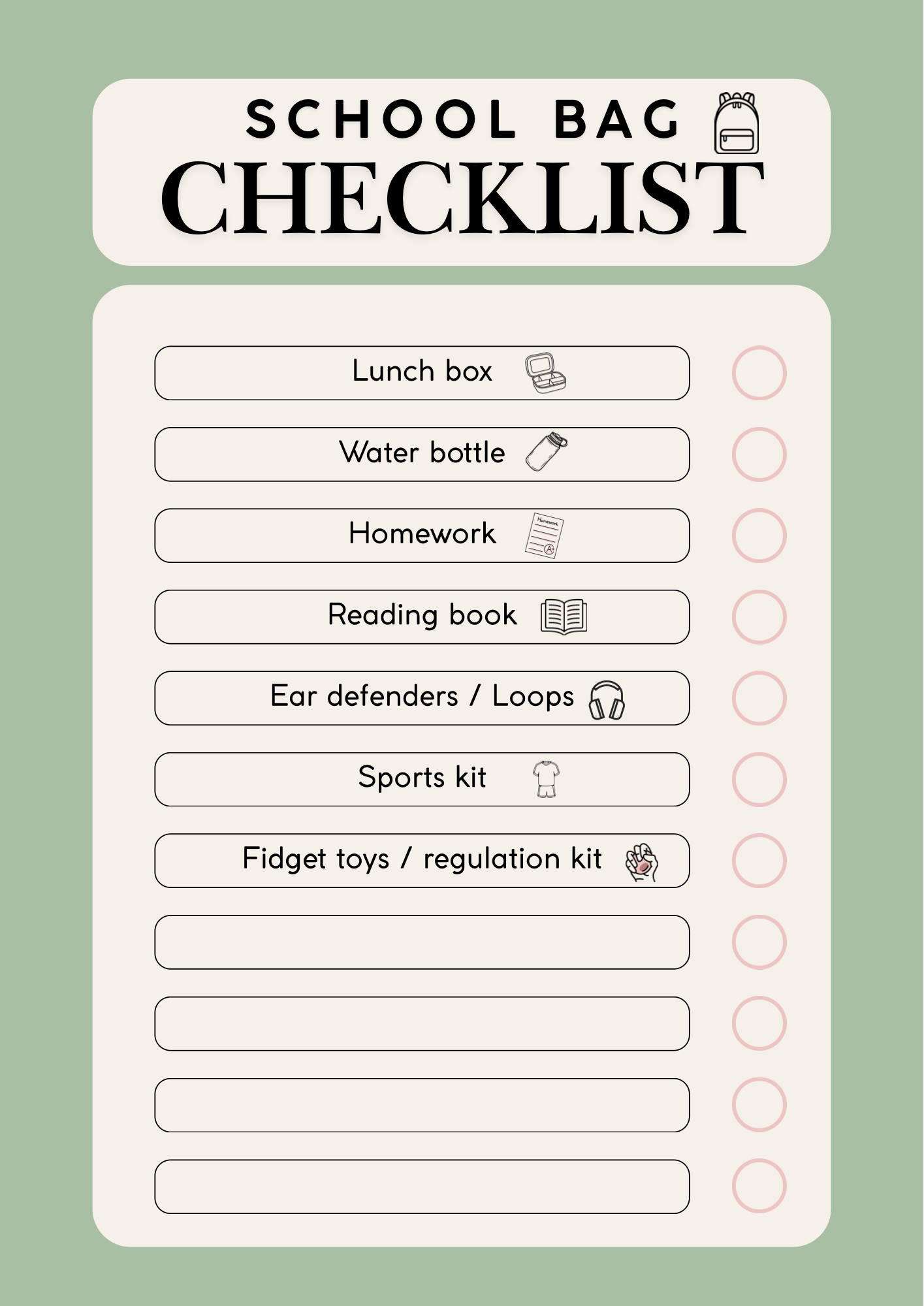
Ready-to-print checklist to reduce the mental load of packing her school bag each morning. Includes 4 blank lines to add your own school bag essentials.
Also includes a blank version so you can create your own personal checklist.
Neuro Nest member? Access for free in the Members’ Resource Library.
Not a member? Add to cart (or join Neuro Nest)
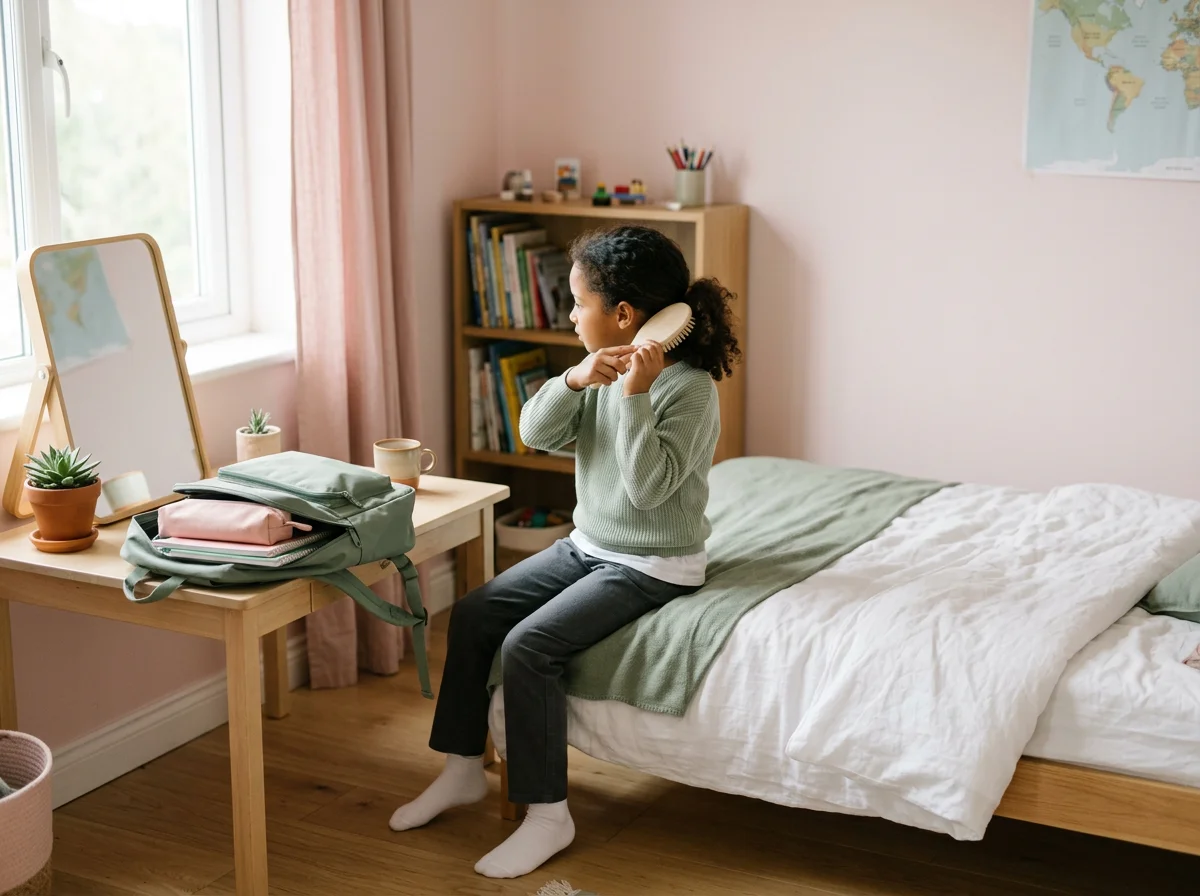
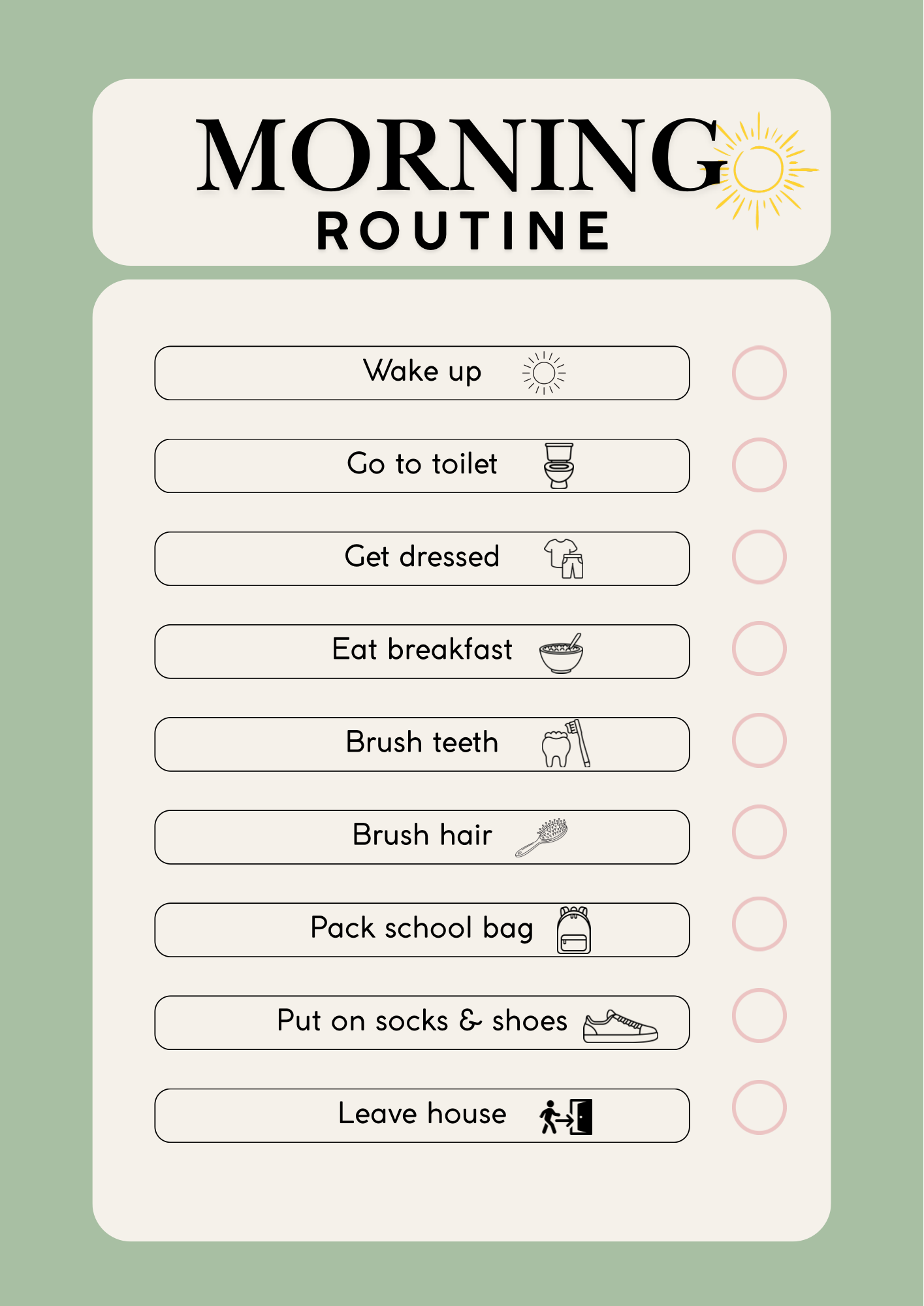
A simple, but effective, checklist to reduce the morning overwhelm (and hopefully cut down the number of times you repeat yourself!).
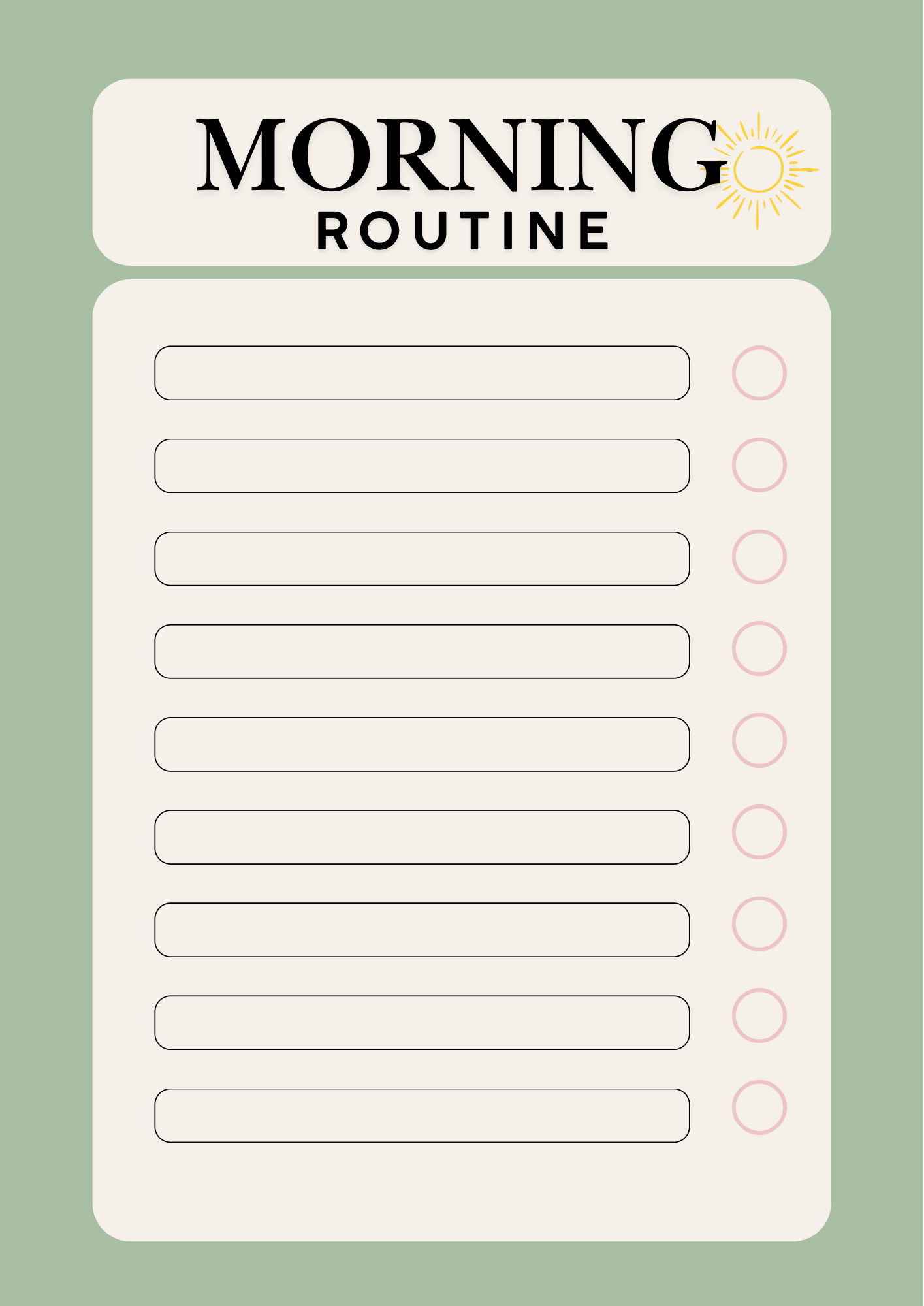
Includes a blank version so you can create your own morning routine.
Neuro Nest member? Access for free in the Members’ Resource Library.
Not a member? Add to cart (or join Neuro Nest)

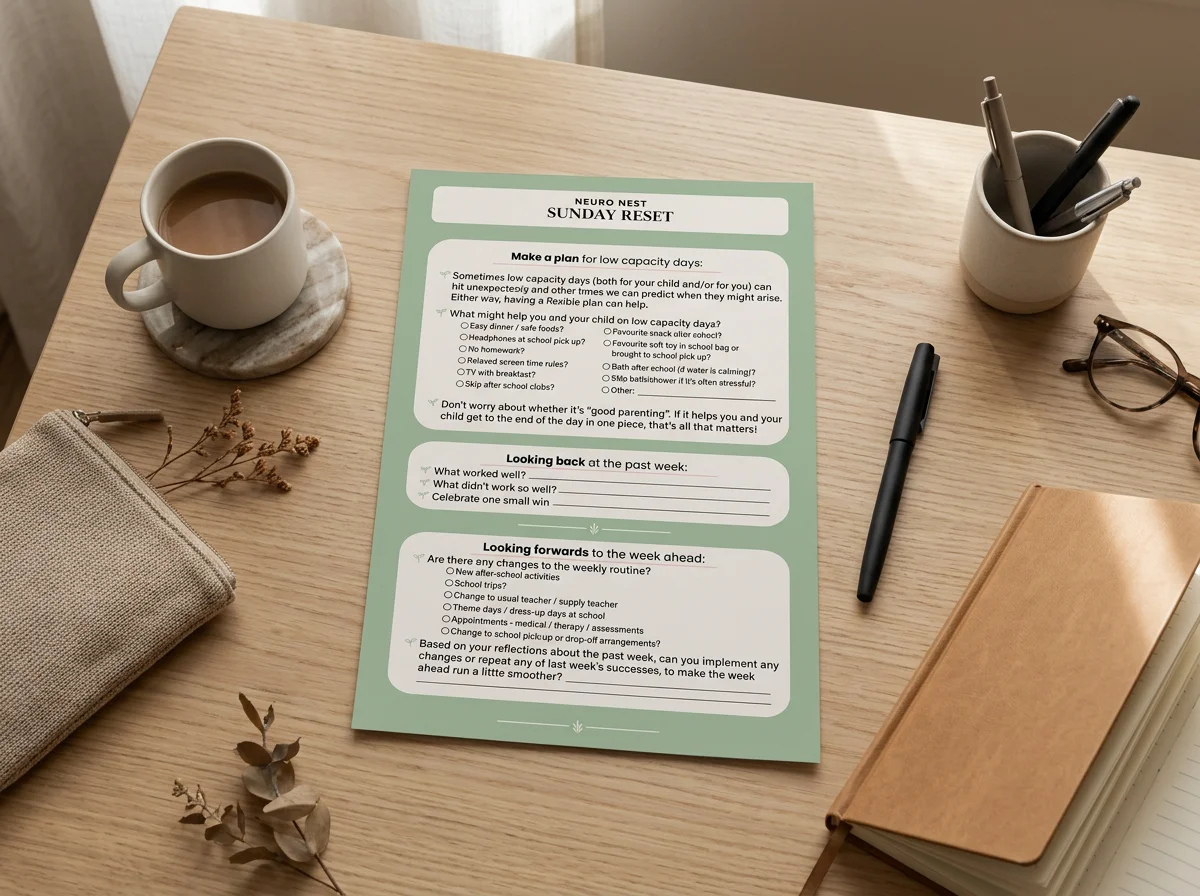
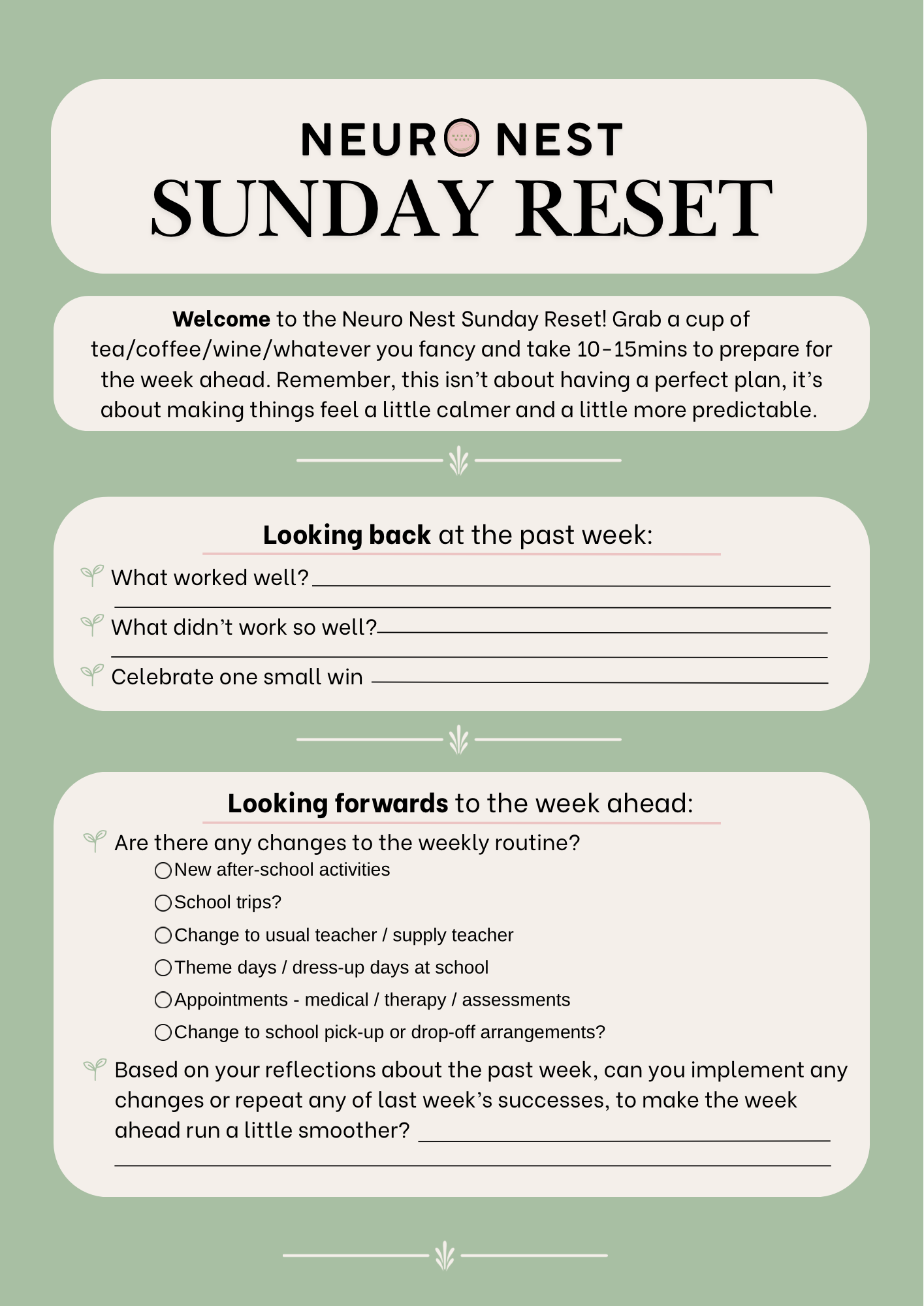
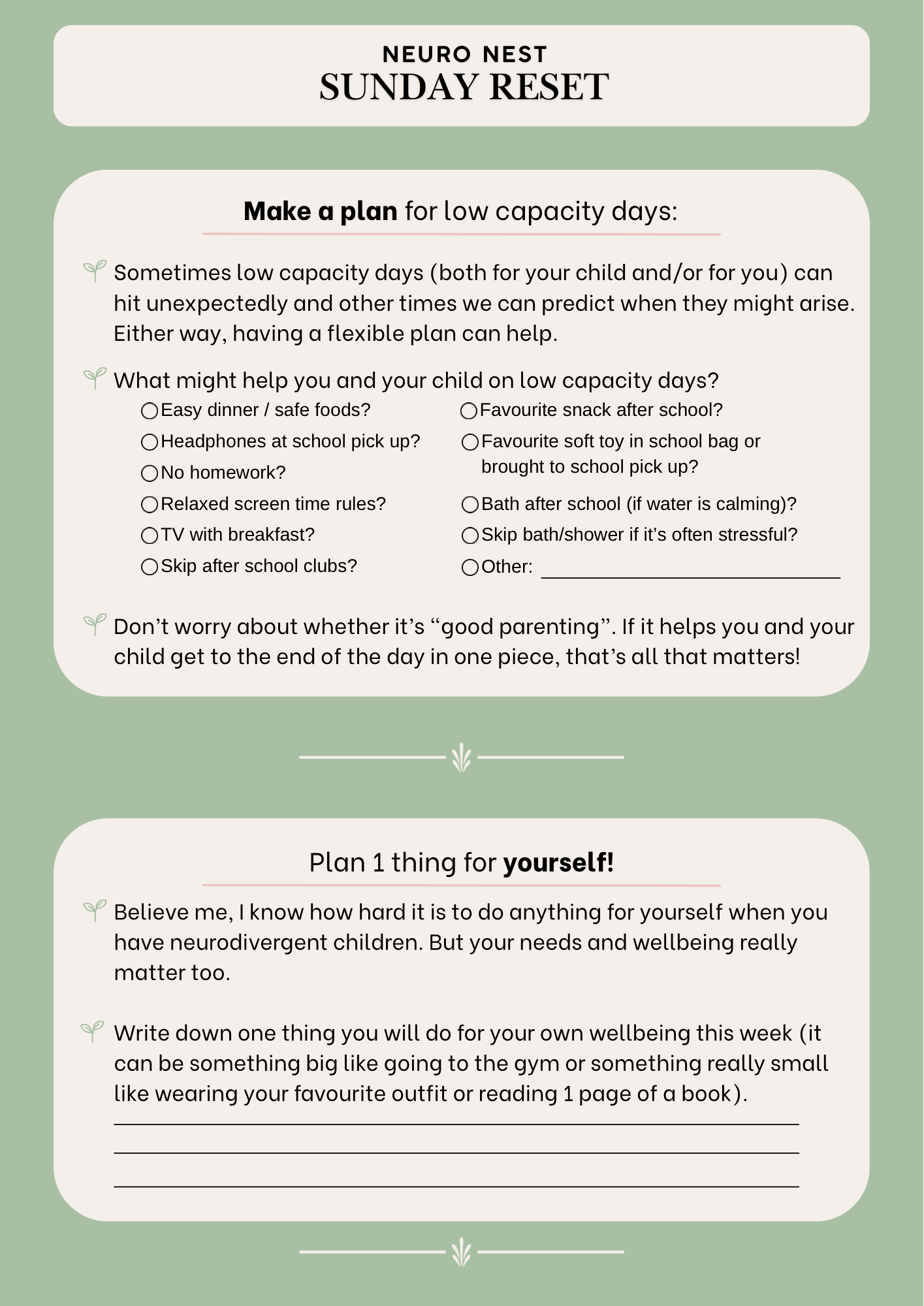
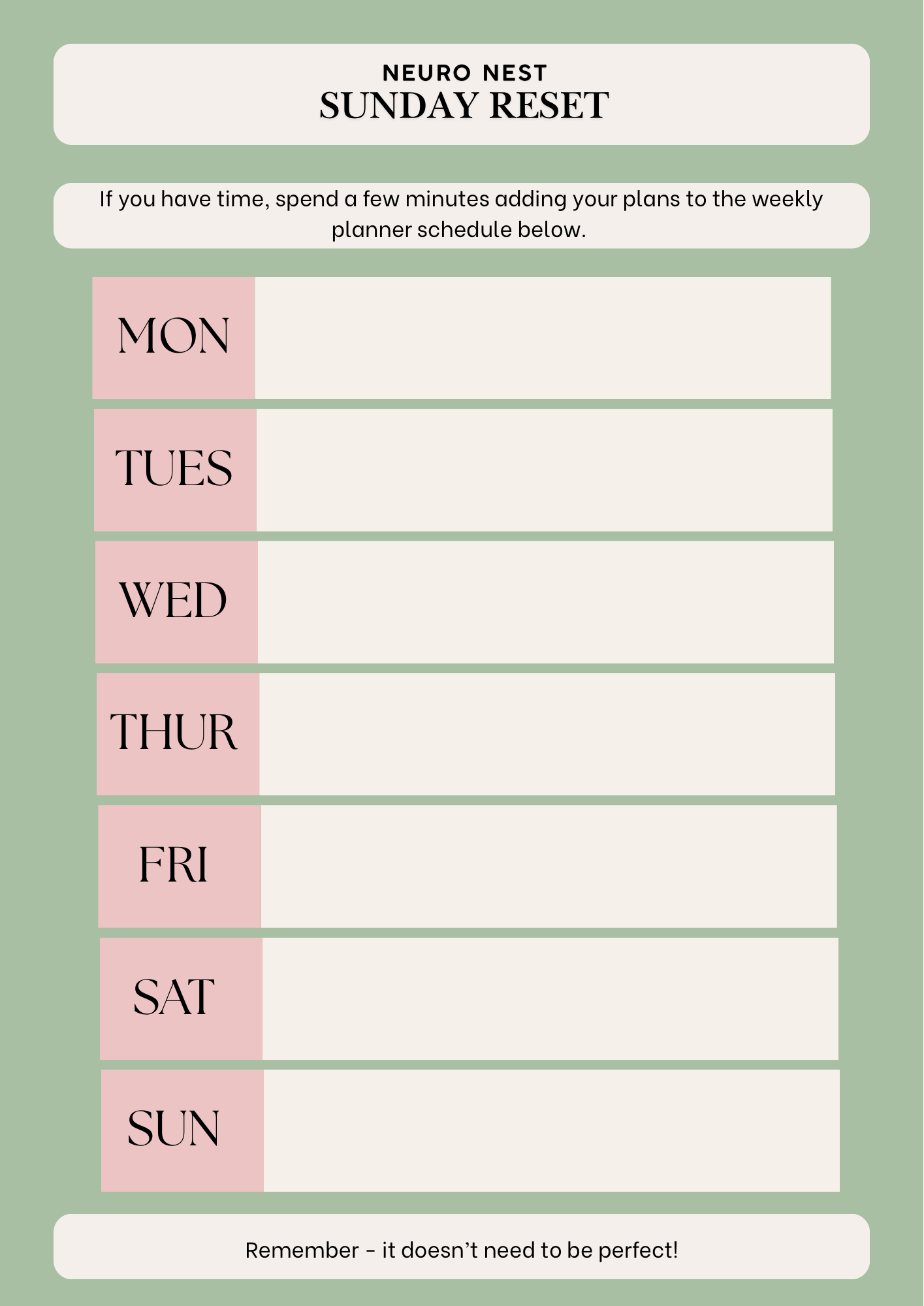
A weekly template designed specifically for neurodivergent families.
Grab a cup of tea/coffee/wine/your drink of choice and spend 10-15 minutes preparing for the week ahead using the Neuro Nest Sunday Reset template.
Reflect on the week that’s been, anticipate potential pressure points, plan for low-capacity days and make the week ahead feel a little calmer and more predictable.
Purchase once, and use every Sunday.
Neuro Nest member? Access for free in the Members’ Resource Library.
Not a member? Add to cart (or join Neuro Nest)
No results match your search. Try removing a few filters.