
When school doesn't see it: Helping you capture the patterns that school may not notice
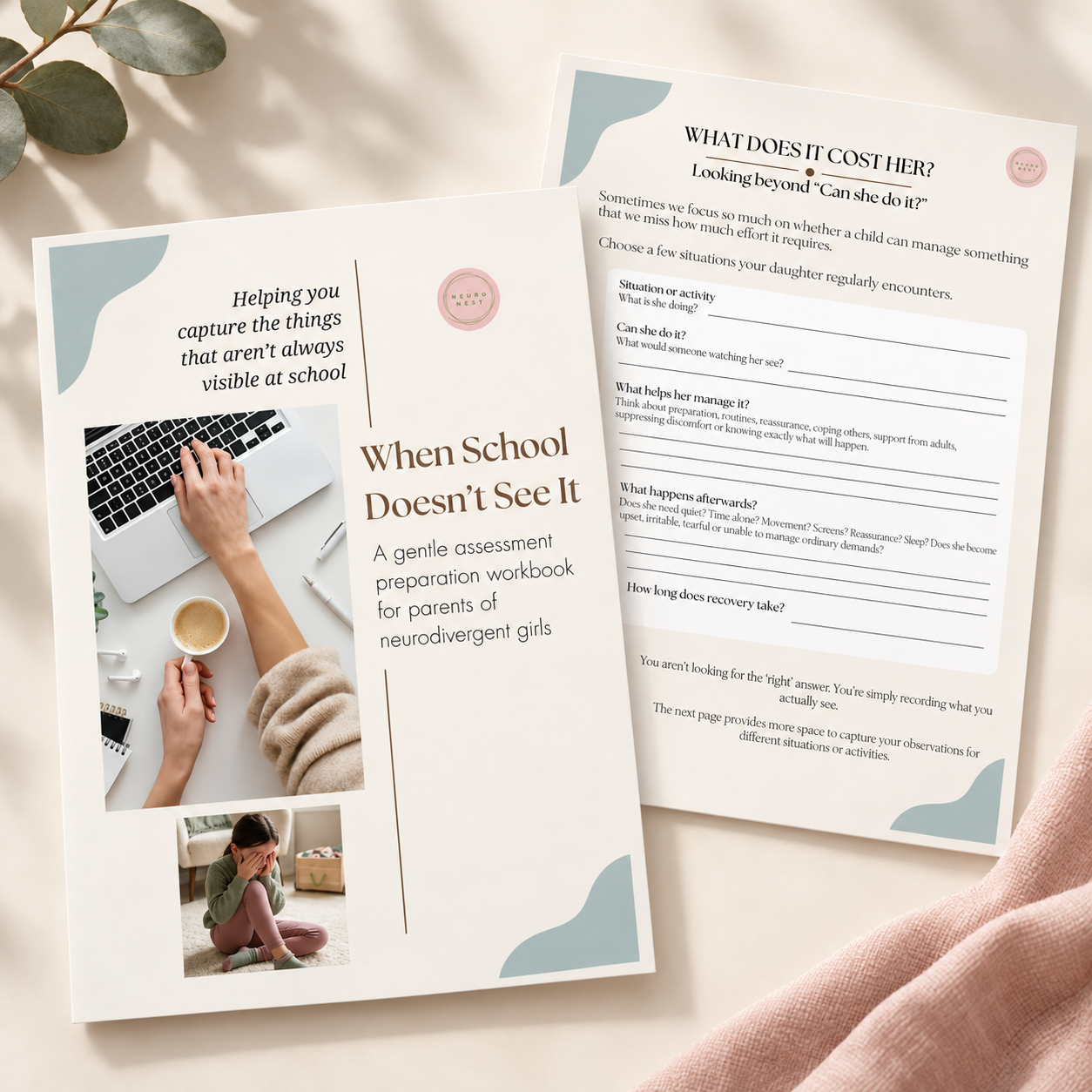
A gentle assessment preparation workbook for parents of neurodivergent girls.
School says she’s fine. But at home, you’re seeing a different picture.
Perhaps your daughter holds everything together during the school day, then falls apart when she gets home.
Perhaps friendships that seem easy from the outside leave her exhausted and worried.
Or perhaps you’re waiting for an autism or ADHD assessment and wondering:
“What if school says they have no concerns? How will I explain what we’re experiencing?”
When School Doesn’t See It helps you gather your observations, notice patterns and prepare to share a fuller picture of your daughter’s life.
Somewhere to put the things you’ve been noticing
When someone asks for examples, it can be surprisingly difficult to know where to start.
There are the school mornings. The worries at bedtime. The recovery after an outing everyone said she enjoyed. The little adjustments you make so automatically that you almost forget they’re there.
This workbook gives you gentle prompts and space to record those experiences, without needing to document every moment or produce a perfectly organised folder.
What’s inside?
Across 14 pages, you’ll find reassurance, practical prompts and worksheets covering:
The two sides of the day: what other people see and what you notice before, around or afterwards.
What does it cost her? Looking beyond whether she can do something to the support, effort and recovery involved.
Patterns I’m noticing: sensory experiences, friendships, transitions, attention, everyday tasks, emotions, school, sleep and interests.
A home and school pattern tracker: bringing together what happened around the school day, what your daughter shared and what helped.
Looking back: prompts to help you recall experiences from early childhood, nursery and primary school.
Her voice: space to capture your daughter’s experiences in her own words.
My assessment summary: pulling together her strengths, your main observations, specific examples and questions you don’t want to forget.
Who is it for?
This workbook is particularly suited to parents who are exploring whether their daughter may be autistic or have ADHD, or who are waiting for an assessment.
It may feel especially helpful if school’s observations differ from yours, or if you find it difficult to explain the effort behind what your daughter appears to manage.
You don’t need a confirmed diagnosis to use it.
Preparation, not proof
This isn’t a checklist to establish whether your daughter is neurodivergent, and it isn’t about proving school wrong.
It’s about recording what you actually notice — including strengths, support needs and experiences that may be less visible in other settings — so you can discuss them with the professionals involved.
You don’t need examples for every section. You don’t need to remember every milestone. And you don’t need to complete it all at once.
Use what helps. Leave what doesn’t.
What you’ll receive
A 14-page printable PDF workbook to download and complete by hand, at your own pace.
This is a digital resource. No physical product will be sent.
Help them understand more of her story
You know parts of your daughter’s life that other people don’t get to see.
This workbook gives you somewhere to capture those observations and somewhere to turn when you’re thinking, “What do I most want them to understand?”
Already a Neuro Nest member?
This workbook is included in your membership at no extra cost. Log in to your members’ area to access your copy rather than purchasing it separately.
This resource supports parents to organise observations and prepare for conversations with professionals. It is not a diagnostic tool, does not guarantee an assessment outcome and does not replace professional assessment or medical advice.